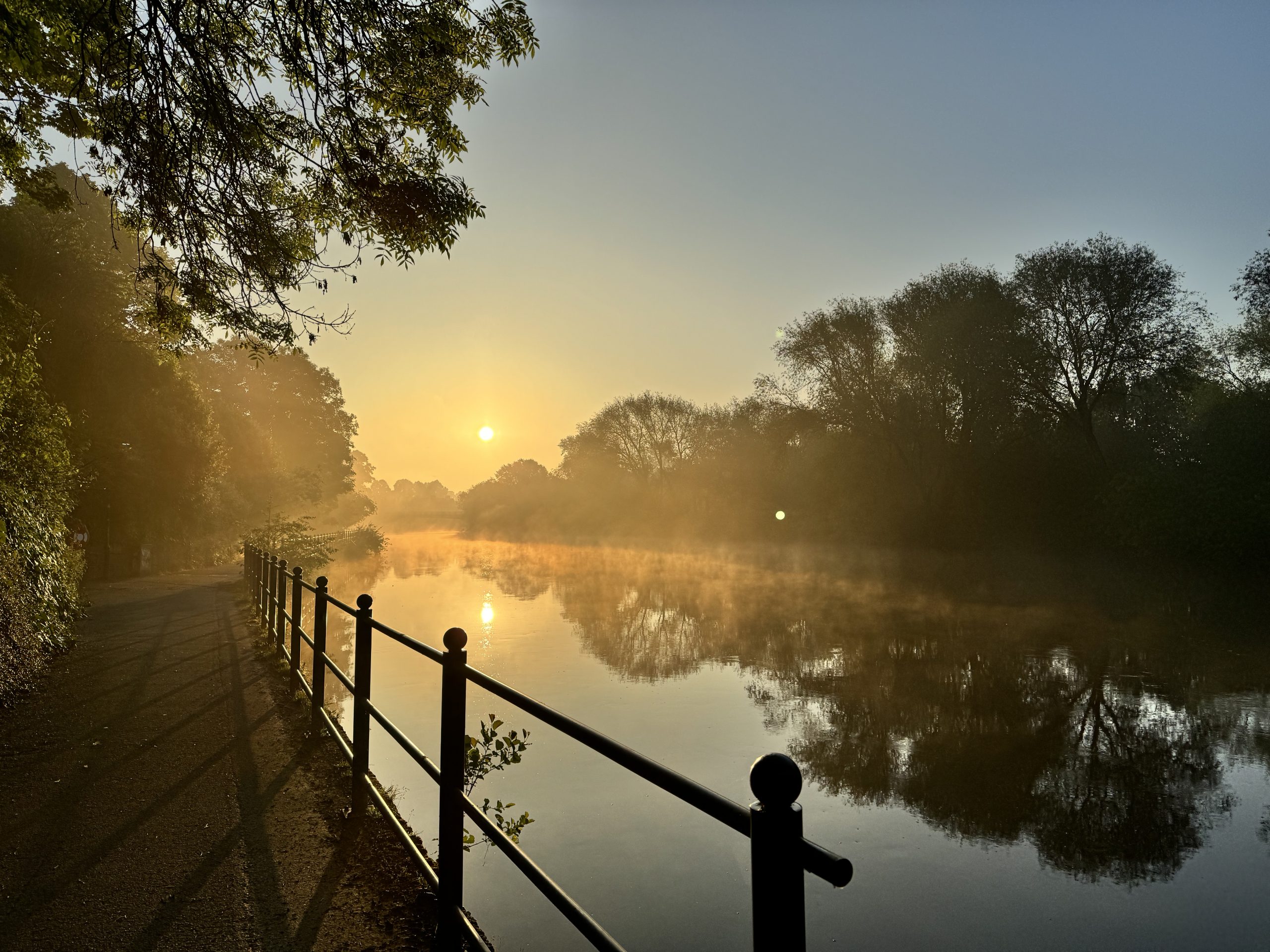

Medium format has been the heartbeat of my photography for over 50 years—from peering down into the magical ground glass of a Rolleiflex twin-lens reflex as a wide-eyed beginner to today, pushing a Fujifilm GFX100 to its absolute limits with pixel-shift shooting for 400MP files that deliver jaw-dropping detail and colour. After a lifetime shooting everything from 35mm SLRs to APS-C and full-frame digital, I've boiled it down to this: if you're buying one last camera—the one to carry you through your most meaningful work—make it medium format. It's not just about specs; it's about rediscovering the joy of images that feel alive, with micro-contrast, tonality, and resolution that smaller formats simply can't match.
My Rolleiflex Awakening
It all began with a Rolleiflex TLR, that iconic twin-lens reflex camera that hooked me on medium format from the start. Back in the late 1960s, as a teenager tinkering with photography, I got my hands on a Rolleiflex 2.8E. The design was pure genius: two matched lenses, the top one feeding a waist-level finder with a bright, reversed image on ground glass, the bottom exposing 120 roll film to create twelve glorious 6x6 cm squares. That larger negative size—2.25x the area of 35mm—meant detail you could dive into, smooth tonal gradients in skies and skin, and a forgiveness for minor exposure slips that felt like a luxury.
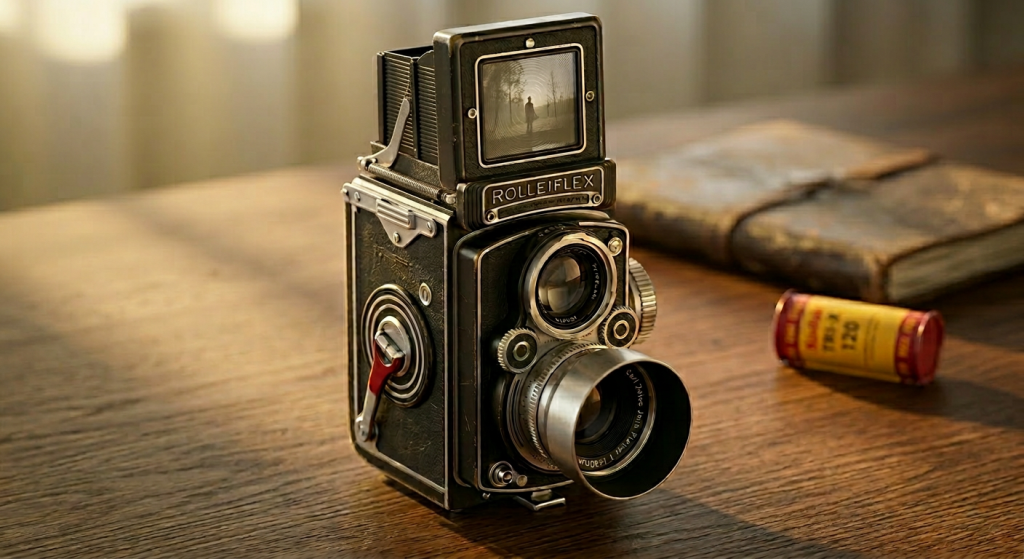
Peering down into that finder was transformative. The world flipped left-to-right, forcing a slower pace. No eye-level aggression; instead, you'd hunch over the camera, flipping the Fresnel screen for darker days, composing with intention. Portraits came alive because subjects relaxed around the waist-level setup—no intimidating SLR at face height. I'd burn through a roll of 12 shots, each one a commitment, teaching me to pre-visualize prints from the start. The joy was in the ritual: loading Tri-X or Plus-X, metering carefully with a handheld light meter, and watching the negative develop into something tangible and rich.
That Rolleiflex shaped my professional path. Early gigs installing audio gear at Neve Electronics had me shooting product shots and events; later, architectural work for the Ferrari Club of America at Watkins Glen demanded the detail only medium format delivered. Even as I detoured into faster systems, I'd rent TLRs or Hasselblads for the jobs that mattered. The format's "look"—that subtle depth, the way highlights rolled off gently—spoiled me forever.
The 35mm Hustle: Speed Over Soul
Professional life meant compromise. By the 1970s and '80s, 35mm SLRs like my Nikon F2 and later Canon bodies became daily drivers. They were fast: motor drives for 5fps bursts, wide apertures for low light, endless rolls of Kodachrome. Digital arrived in the '90s with APS-C sensors on cameras like the Canon 20D, then full-frame miracles like the 5D Mark II. Autofocus locked onto race cars at 200mph; high ISOs climbed to usable 6400; memory cards held thousands of frames.
These tools paid the bills. Event photography, automotive, product and promotional work—speed and volume ruled. Full-frame files were sharp, dynamic range ballooned to 14 stops, and Lightroom made miracles routine. But a nagging truth persisted: for landscapes, fine-art prints, or client work demanding huge enlargements, I'd feel the limitations. Noise crept into shadows past ISO 3200; crops killed detail; tonal steps looked stepped, not silken.
Over decades, the pattern repeated. Smaller formats excelled at "good enough" for web, magazines, social. But my portfolio keepers? Always medium format—film or digital rentals. The detour taught me what I craved: a bigger canvas for deliberate work.
Medium Format's Enduring Magic
Why does medium format keep winning? It's physics and artistry intertwined. Modern GFX sensors (44x33mm) offer 1.7x the area of full-frame (36x24mm), packing 50-100MP+ into that space. Resolution surges: crop 50% and still out-res full-frame natives. But the real joy is subtler—tonal rendition. Larger photo sensors capture more light per pixel, yielding 16+ stops of dynamic range with micro-contrast that makes textures pop: bark veins, fabric weaves, distant mountain ridges.
Depth of field sweetens it. At equivalent apertures, MF gives creamier bokeh with gradual falloff—no harsh edges like full-frame at f/1.4. Post-processing? Shadows lift clean; highlights recover without blotch. It's the film-era soul digitized: think Kodachrome skies without the grain.
Trade-offs exist—bulkier bodies, pricier glass (£2k+ per lens), slower bursts (4-7fps vs. 20+). Early digital MF lagged in AF and ISO. But 2020s tech flipped the script: IBIS, face/eye detect, weather sealing. For my landscapes, cityscapes at dawn, and architectural prints, these are features, not bugs.
| Feature | Full-Frame (e.g., Sony A1) | Medium Format (e.g., GFX100) |
| Sensor Area | 36x24mm | 44x33mm (1.7x larger) |
| Resolution | 50MP | 102MP (400MP pixel-shift) |
| Dynamic Range | 15 stops | 16+ stops |
| ISO Usability | 12,800+ | 6400 (cleaner shadows) |
| Burst Speed | 30fps | 7fps |
| Lens Cost (Prime) | £1-2k | £2-4k |
| Print Size (Native) | 60x40" @ 300dpi | 100x75" @ 300dpi |
This table shows why MF is the "last" choice: headroom for decades.
Discovering the GFX100: Joy Unleashed
The Fujifilm GFX100 (2020 launch, refined in GFX100 II) was my homecoming. At 102MP on a BSI CMOS sensor, it's not true 6x6 but close enough in spirit—crop-safe for 4:3, 3:2, even 1:1 like my Rolleiflex. IBIS (8 stops) lets me handhold at 1/4s for low-light cityscapes. AF? 3.76 million phase points, animal detect—lock-on for portraits rivals full-frame.
But the pure joy? Pixel-shift multishot. The GFX100 shifts its sensor 16 times across a 0.5-second burst, fusing into a 400MP DNG (over 10x full-frame file size in data terms). Detail explodes: leaf serrations, brick mortar, distant waves—all razor-sharp. Micro-contrast gains 20-30% edge definition; colors hit near-perfect rendition, with Fuji's film sims (Classic Chrome, Astia) baked in. Shadows reveal textures invisible in native files; skies gradient flawlessly.
I've pushed it on Shropshire walks with Mila the Great Dane, Lanzarote trips (my guide's 75% done), even automotive shots of classic cars. A 400MP file prints billboard-sized without sweat, survives 70% crops, and in Luminar Neo or Photoshop, it's a playground—AI upscaling adds zero artifacts. Battery lasts 500+ shots; CF express cards gulp these beasts of files. Paired with GF 32-64mm f/4 or 110mm f/2, it's portable poetry.
Downsides? Buffer fills fast in pixel-shift (use tripod mode); video caps at 4K/30p open-gate. But for my stills-focused life—portfolios, "A Photographer's Guide" site, Shopify prints—it's flawless.
Pixel-Shift: The 400MP Revelation
Let's geek out on pixel-shift, because this sealed it as my "one last camera." Traditional 102MP interleaves pixels; pixel-shift physically moves the sensor (0.5px steps) 16 times, sampling every position. Result: 400MP DNG with quadruple color samples per "pixel," killing moiré, boosting signal-to-noise 2 stops.
In practice: Shoot a misty landscape at f/8. Native file? Stunning. Pixel-shift? Veins in distant trees resolve; rock faces gain 3D pop; blues/greens separate like never before. Detail rivals scanning a 4x5 negative; micro-contrast makes full-frame look flat. Files top 800MB, but my 2026 workflow (8TB RAID, Windows AI enhanced workstation) laughs it off. Export JPEGs for web; keep DNGs for eternity.
This isn't gimmick—it's the future I dreamed of with Rolleiflex. 50 years ago, I'd dodge-burn darkroom prints; now, I "dodge-burn" digital with surgical precision. Joy multiplies: early AM walks yield frames I pore over for hours, finding new depths.
Why Your Last Camera Must Be Medium Format
"One last camera" means intent: no more chasing 60MP full-frame or 8K video. You want tools elevating vision, not specs. Medium format delivers:
- Future-Proof Files: 400MP survives 8K monitors, 120" prints, AI crops. Full-frame tops out faster.
- Authentic Rendering: Can't fake MF's bokeh ramp, shadow grace. It's your voice.
- Mindful Pace: Slows you to Rolleiflex tempo—better hits, less chaff.
- Workflow Longevity: Files age like wine; new software unlocks more.
- Personal Joy: Pushing limits (pixel-shift in wind!) reignites passion.
Cost? GFX100 II ~£6k body; kit lens £2k. Steep, but vs. full-frame kits (£10k+ with glass), it's one-and-done. Sell the rest of your kit; fund prints.
Full Circle: 50 Years Later
From Rolleiflex squares to GFX 400MP beasts, medium format endures. That TLR gave scale, patience, beauty. GFX100 adds speed, reach, magic. My work—landscapes, cars, family with Liz and Lucinda—thrives. Children's books get lush illustrations; site's tutorials glow.
If you're serious, skip the detour. Buy medium format last. You'll thank me when you see the files.